

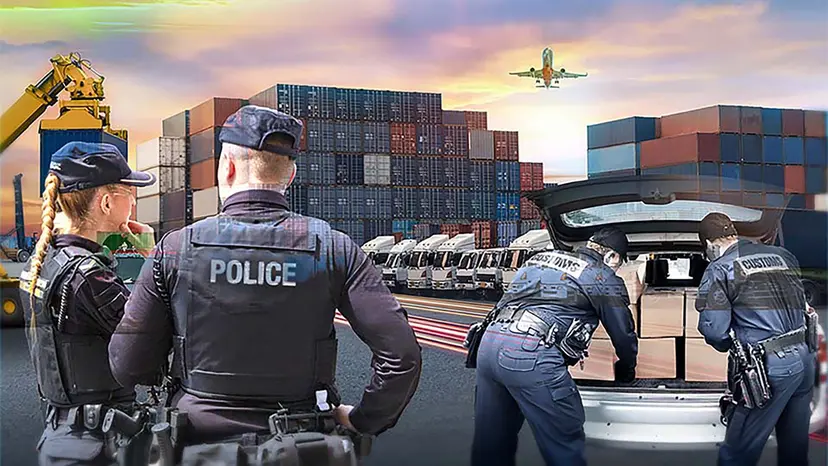
Joint enforcement across European Union borders and internal markets reached an all-time high in 2025, with authorities intercepting more than 196 million counterfeit items valued at an estimated €6.3 billion.
According to new data published by the European Commission and the European Union Intellectual Property Office (EUIPO), total seizures surged by 67% compared to 2024, surpassing the previous record set in 2023 by 29%. The figures reflect coordinated operations between external border customs officials, national police forces, and internal market surveillance authorities (MSAs).
Most Frequently Seized Counterfeit Products
Counterfeit trafficking continues to pose significant risks to consumer health, market competition, and brand innovation across both brick-and-mortar and online marketplaces. In 2025, enforcement seizures were heavily concentrated in specific consumer categories:
-
Recorded Media (CDs/DVDs): Music, films, TV box sets, retro games, and software accounted for nearly 30% of all intercepted items.
-
Toys and Games: Toys made up almost 20% of seizures, followed closely by video games and electronic consoles.
-
Apparel and Tobacco: Clothing, traditional cigarettes, and vaping/e-cigarette devices remained consistently high on the enforcement radar.
E-Commerce Pressure and the Role of EU Customs
At the EU’s external borders, customs authorities alone intercepted roughly 42 million counterfeit goods worth nearly €2 billion—another all-time record.
The vast majority of individual customs interventions occurred within postal and express courier parcels, driven by the booming volume of cross-border e-commerce. Fragmented supply chains and varied shipping channels have made border screening increasingly complex. To counter this, the EU’s newly adopted Customs Reform will establish a centralized EU Customs Authority and an AI-powered EU Customs Data Hub, enabling real-time supply chain visibility and faster risk profiling.
Key Enforcement Trends at the EU Border
The joint Commission-EUIPO report highlights several notable shifts in how counterfeit goods enter and move through the bloc:
-
Concentration by Member State: Just seven EU countries accounted for 90% of total seizure volume (Romania, Bulgaria, Italy, the Netherlands, Germany, France, and Belgium), while seven nations represented 90% of total estimated value (Spain, Germany, the Netherlands, France, Belgium, Greece, and Poland).
-
Primary Origins: Mainland China, Hong Kong (China), and Türkiye remained the top source locations for counterfeit shipments entering the EU.
-
Transport Shifts: While maritime freight still accounted for the highest total value of seized fakes, road transport overtook sea cargo for the first time in terms of total unit volume—even as small e-commerce parcels generated the highest number of individual detention cases.
-
IP Infringement & Circumvention Tactics: Trademark violations were the leading intellectual property breach, followed by registered designs. Authorities also noted high seizure rates for standalone labels and packaging materials, which traffickers import separately to assemble fake products inside the EU and bypass border checks.
Overall, the 2025 findings underscore the critical need for unified, data-driven enforcement to shield European consumers from substandard goods and protect legitimate businesses from intellectual property theft.